Pseudotropheus flavus also known by the trade name of dinghani comes from only two remote islands in Lake Malawi. These two locations are Chinyamwezi Rocks and Chinyankwazi Island. From Kambiri Point this is about a 2 hour boat ride in one of Stuart Grant’s boats. The water is extremely clear here, because these islands are far from the mainland. On a perfectly clear day the mainland is only a dark line on the horizon. As well there are only rocks/boulders covered in algae around these two locations, so there is nothing really to stir up on the bottom.
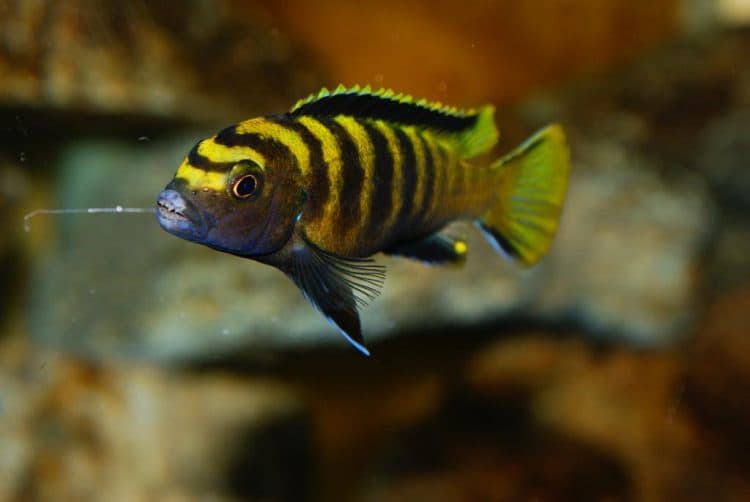
This striking yellow and black striped fish is more prevalent around Chinyankwazi Island and displaying males here are a common site. Females which are more brownish with stripes can be seen being chased or holding mouthfuls of eggs. There are lots of other fish here and the diving is great. So far I have spent approximately 3-4 hours underwater in each location observing this species and others and can’t wait to go back. There are always so many pictures to take and so little time. One could really spend days at each location and not see everything.
Well, to carry on, I usually do not bring too many fish back from this trip because the price of a box of fish is just too much after having spent a large amount on the trip itself, but in 2002 I did.
Ps. flavus was one particular wild fish that was always hard to get. I found them in Stuart’s holding vats and had them hand picked by Jody McManus who was staying there for 4 months as a CRLCA intern. Jody has a great eye for fish and packed me a handful of males with lots of females.
Receiving them back here in Canada was no problem. The fish came in through the CRLCA depot in Guelph and within an hour I had them back to my house and was acclimatizing them into my tanks. The 15 fish were housed into a fifty gallon tank and within another few days were starting to show some aggression, so after a week or so the colony was split into two tanks and then some were sold. The remaining group of 10 fish continued to do well and within a month all the females were holding eggs.
Twenty days post spawn the females were stripped and the fry with some yolk sac were scurrying around the bottom of the tank. There was approximately 50-60 fry from this first group.
Housed in 2˝ gallon tanks for about three weeks the fry grew pretty well. They were fed the usual baby brine shrimp while in this tank and then on Tetra Mini Bits when they were moved into their larger quarters. It was at about four months of age and the fish were about 2 inches some males started to show their yellow colouring and occasionally started to spar with each other.
In my observations with this and some other species that were the first generation from wild fish (G1) I found that the fry colour up much faster than wild stock and the colour is better (some male wild stock never really seem to show their best colours at all).
Most of these Ps. flavus were showing adult colour at 5 months and were starting to breed. By the colours and relatively early breeding of this species they really could be called “Busy Bees”.
Leave a Reply